

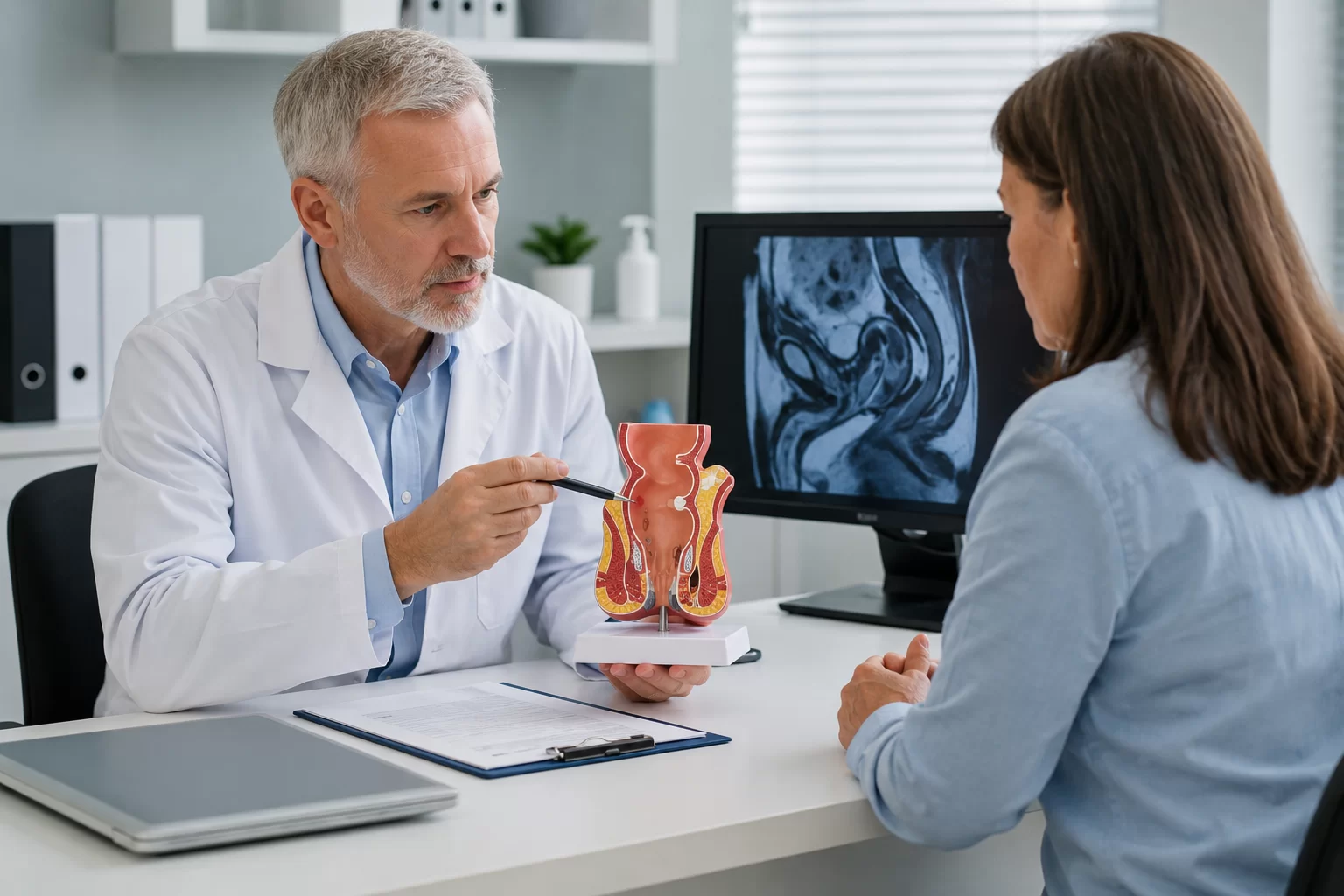
Key Takeaways
- Rectal prolapse treatment depends on the severity of the condition, the patient’s overall health, and the impact symptoms have on daily life.
- Rectal prolapse occurs when part or all of the rectum slips outside the anus.
- Early symptoms may include a feeling of pressure, difficulty controlling bowel movements, or a visible bulge during bowel movements.
- While lifestyle modifications can help manage symptoms, surgery is often the most effective long-term treatment.
- Early evaluation by a colorectal specialist can prevent complications and improve quality of life.
What Is Rectal Prolapse?
Rectal prolapse occurs when the rectum, the final portion of the large intestine, loses its normal support structures and protrudes through the anal opening. Although the condition is not typically life-threatening, it can significantly affect comfort, bowel function, and overall quality of life.
Rectal prolapse is more common in older adults, particularly women, but it can occur in individuals of any age. Because symptoms often develop gradually, many patients delay seeking care until the condition becomes more advanced.
Understanding available rectal prolapse treatment options can help patients make informed decisions and seek care before symptoms worsen.
Types of Rectal Prolapse
There are three primary forms of rectal prolapse:
External Rectal Prolapse
This occurs when the entire thickness of the rectal wall protrudes through the anus. It is the most recognizable form and often appears as a red, circular mass outside the body.
Internal Rectal Prolapse
Also known as intussusception, this occurs when the rectum folds into itself but does not protrude externally.
Mucosal Prolapse
Only the inner lining of the rectum protrudes through the anal opening. This form is generally less severe but can still cause discomfort and symptoms.
Common Causes of Rectal Prolapse
Several factors may contribute to rectal prolapse, including:
- Chronic constipation
- Repeated straining during bowel movements
- Pelvic floor weakness
- Previous pelvic surgery
- Neurological disorders
- Childbirth-related pelvic damage
- Aging and tissue weakening
Over time, these factors can weaken the structures that normally support the rectum.
Symptoms of Rectal Prolapse
Symptoms may vary depending on the severity of the prolapse.
Common symptoms include:
- A visible bulge protruding from the anus
- Difficulty controlling bowel movements
- Fecal leakage or incontinence
- Feeling of incomplete bowel emptying
- Rectal bleeding
- Mucus discharge
- Pain or discomfort in the rectal area
- Pressure or heaviness in the pelvis
Many patients initially notice symptoms only during bowel movements, but advanced prolapse may remain visible even while standing or walking.
Diagnosing Rectal Prolapse
A colorectal specialist can usually diagnose rectal prolapse through a physical examination and review of symptoms.
Additional testing may include:
Defecography
This imaging study evaluates how the rectum functions during bowel movements.
Colonoscopy
A colonoscopy may be recommended to rule out polyps, tumors, or other colorectal conditions.
Anal Manometry
This test measures the strength and function of the anal sphincter muscles.
MRI or Pelvic Floor Imaging
Advanced imaging can provide detailed information about pelvic floor structures and associated disorders.
Non-Surgical Rectal Prolapse Treatment
While surgery is often the definitive treatment, conservative management may help patients with mild symptoms or those who are not candidates for surgery.
Dietary Changes
Increasing fiber intake can help reduce constipation and minimize straining.
Recommended sources include:
- Fruits
- Vegetables
- Whole grains
- Legumes
Hydration
Adequate fluid intake helps maintain soft stools and promotes regular bowel movements.
Pelvic Floor Therapy
Specialized physical therapy can strengthen pelvic muscles and improve bowel control.
Stool Softeners
These may be prescribed to reduce straining and ease bowel movements.
Although these measures may improve symptoms, they generally do not correct the prolapse itself.
Surgical Rectal Prolapse Treatment
For most patients, surgery offers the best long-term solution.
The goal of surgery is to restore the rectum to its normal position and improve bowel function.
Abdominal Procedures
These operations are performed through the abdomen, often using minimally invasive techniques.
Rectopexy
The rectum is repositioned and secured to surrounding structures to prevent future prolapse.
Resection Rectopexy
This procedure combines rectopexy with removal of a portion of the colon, often benefiting patients with chronic constipation.
Perineal Procedures
These approaches are performed through the anal area and may be preferred for older patients or those with significant medical conditions.
Altemeier Procedure
The prolapsed segment of rectum is removed, and the remaining tissue is reconnected.
Delorme Procedure
The inner lining of the prolapsed rectum is removed, and the muscular layer is reinforced.
Your surgeon will determine the most appropriate procedure based on your health, anatomy, and symptoms.
Benefits of Minimally Invasive Surgery
Modern surgical techniques offer several advantages:
- Smaller incisions
- Reduced postoperative pain
- Shorter hospital stays
- Faster recovery
- Lower complication rates
Many patients can return to normal activities much sooner than with traditional open surgery.
Recovery After Rectal Prolapse Surgery
Recovery varies depending on the procedure performed.
Patients are generally advised to:
- Follow a high-fiber diet
- Stay hydrated
- Avoid heavy lifting
- Take prescribed medications as directed
- Attend follow-up appointments
Most individuals experience significant symptom improvement and enhanced quality of life after successful treatment.
Potential Complications If Left Untreated
Without proper treatment, rectal prolapse can worsen over time and lead to:
- Chronic fecal incontinence
- Persistent constipation
- Ulceration of rectal tissue
- Increased discomfort and bleeding
- Difficulty with daily activities
Seeking care early often leads to better outcomes and simpler treatment options.
Frequently Asked Questions
Can rectal prolapse heal on its own?
No. Once a prolapse develops, it generally does not resolve without medical intervention.
Is rectal prolapse an emergency?
Most cases are not emergencies, but prompt evaluation is important to prevent worsening symptoms and complications.
How successful is rectal prolapse surgery?
Success rates are generally high, with most patients experiencing significant symptom relief and improved bowel function.
Can rectal prolapse come back after surgery?
Recurrence is possible, but modern surgical techniques significantly reduce this risk.
Who is most likely to develop rectal prolapse?
The condition is most common among older adults, particularly women, but it can affect anyone with risk factors such as chronic constipation or pelvic floor weakness.
Living with rectal prolapse can be physically uncomfortable and emotionally challenging. Fortunately, modern rectal prolapse treatment options offer effective solutions that can restore comfort, improve bowel function, and enhance quality of life.
At RS Surgical, our experienced colorectal specialists provide comprehensive evaluation and individualized treatment plans tailored to each patient’s needs. Whether you are experiencing mild symptoms or advanced prolapse, our team is here to help you find the right path forward.
Schedule a Consultation
If you are experiencing symptoms of rectal prolapse or have concerns about your colorectal health, contact RS Surgical today.
Visit our website to learn more about our services or schedule a consultation with one of our specialists. Early evaluation and treatment can help prevent complications and support better long-term outcomes.