

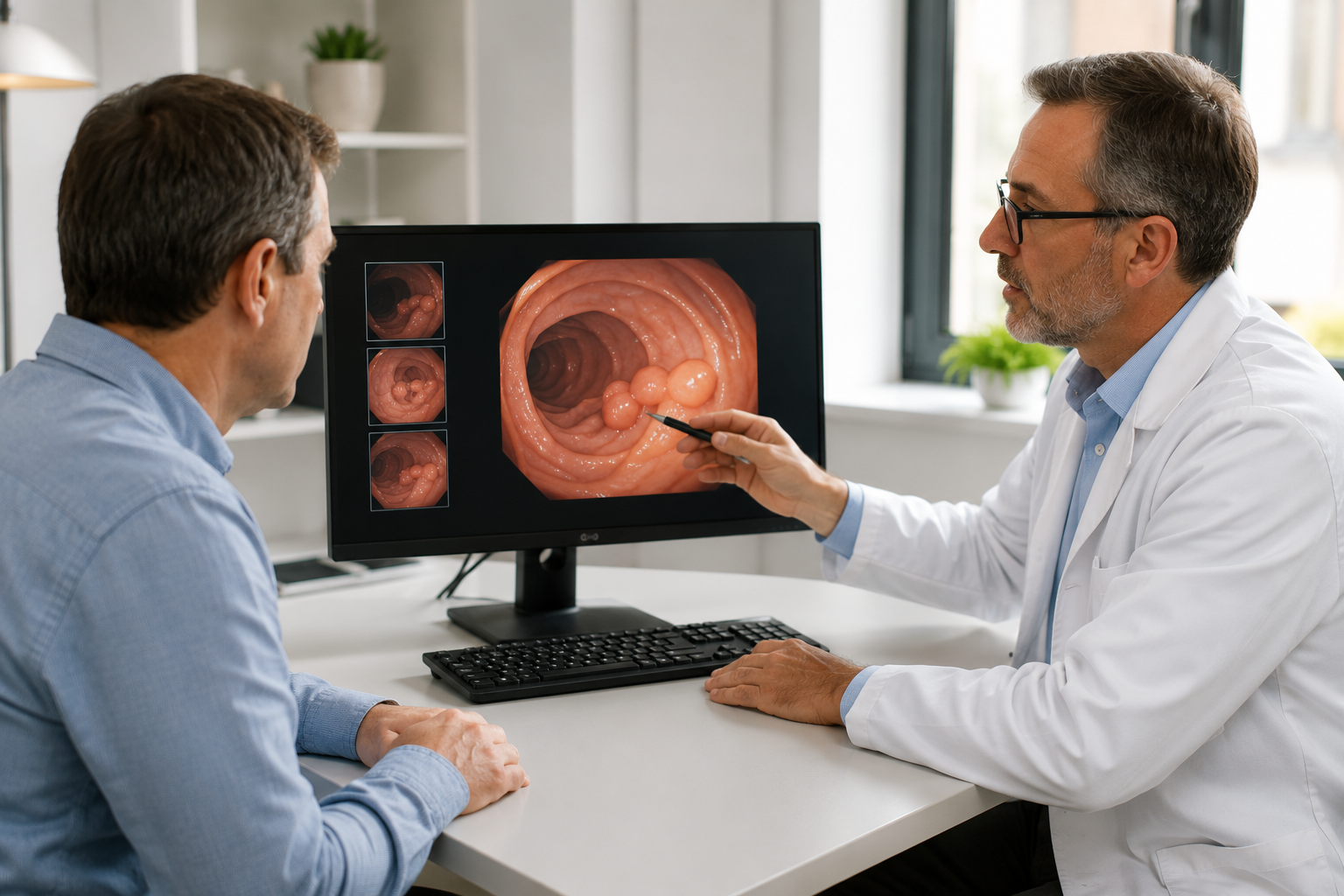
Key Takeaways
- Colon polyp symptoms are often subtle or completely absent, which is why routine colorectal screening is so important.
- While many polyps are benign, some can develop into colorectal cancer if left untreated.
- Symptoms may include rectal bleeding, changes in bowel habits, abdominal discomfort, and unexplained anemia.
- Colonoscopy remains the most effective method for detecting and removing polyps before they become cancerous.
- Early detection and treatment can significantly reduce the risk of colorectal cancer.
What Are Colon Polyps?
Colon polyps are growths that develop on the inner lining of the colon or rectum. They vary in size, shape, and type. While many polyps are harmless, certain types can become cancerous over time.
Most colorectal cancers begin as polyps. This is why identifying and removing them early is one of the most effective ways to prevent colorectal cancer.
At RS Surgical, we frequently diagnose and treat colon polyps as part of comprehensive colorectal care. Understanding the warning signs can help patients seek timely evaluation and treatment.
Types of Colon Polyps
Not all polyps carry the same level of risk.
Adenomatous Polyps
These are the most common precancerous polyps. Although not all adenomas become cancerous, most colorectal cancers begin as this type.
Hyperplastic Polyps
These are generally considered low risk and are usually found in the lower colon.
Sessile Serrated Polyps
These flat polyps can be more difficult to detect and may have a higher cancer risk than previously believed.
Inflammatory Polyps
These often occur in patients with inflammatory bowel diseases such as Crohn’s disease or ulcerative colitis.
Understanding Colon Polyp Symptoms
One of the challenges of detecting colon polyps is that they often cause no symptoms at all. Many patients discover they have polyps only during routine screening.
However, larger polyps or certain types of growths may produce symptoms that should not be ignored.
Rectal Bleeding
One of the most common colon polyp symptoms is rectal bleeding.
You may notice:
- Bright red blood on toilet paper
- Blood mixed with stool
- Dark or maroon-colored stool
Although hemorrhoids and other conditions can also cause bleeding, any unexplained rectal bleeding should be evaluated by a medical professional.
Changes in Bowel Habits
Polyps can sometimes affect how stool moves through the colon.
Potential changes include:
- Persistent constipation
- Chronic diarrhea
- Narrow stools
- Changes in stool consistency
If these symptoms persist for more than a few weeks, medical evaluation is recommended.
Abdominal Pain or Cramping
Large polyps can occasionally create partial blockages within the colon, leading to:
- Abdominal discomfort
- Cramping
- Bloating
- A feeling of fullness
These symptoms may come and go but should not be ignored.
Iron Deficiency Anemia
Some polyps bleed slowly over time without producing visible blood in the stool.
This hidden bleeding can result in:
- Fatigue
- Weakness
- Shortness of breath
- Dizziness
In some cases, anemia may be the first indication that a colon polyp is present.
Unexplained Weight Loss
Although less common, unexplained weight loss may occur if a polyp has progressed to colorectal cancer.
Any unexplained weight loss should be discussed with a healthcare provider.
Who Is Most at Risk?
Several factors increase the likelihood of developing colon polyps.
Age
The risk increases significantly after age 45.
Family History
A family history of:
- Colon polyps
- Colorectal cancer
- Certain inherited syndromes
can increase your risk substantially.
Lifestyle Factors
Additional risk factors include:
- Smoking
- Excessive alcohol consumption
- Obesity
- Physical inactivity
- Diets high in red and processed meats
Medical Conditions
Certain conditions increase risk, including:
- Crohn’s disease
- Ulcerative colitis
- Type 2 diabetes
Why Colonoscopy Is So Important
Because colon polyp symptoms are often absent, routine screening is critical.
A colonoscopy allows physicians to:
- View the entire colon
- Detect polyps before they cause symptoms
- Remove polyps during the same procedure
- Obtain tissue samples if necessary
This combination of diagnosis and treatment makes colonoscopy one of the most effective cancer prevention tools available.
What Happens During Polyp Removal?
Most polyps can be removed during a routine colonoscopy.
Common techniques include:
Snare Polypectomy
A wire loop is placed around the polyp and used to remove it.
Cold Snare Removal
Often used for smaller polyps without cauterization.
Advanced Endoscopic Procedures
Larger or more complex polyps may require specialized removal techniques.
Following removal, the tissue is sent to a pathology laboratory for analysis.
Can Colon Polyps Become Cancer?
Yes.
While not every polyp becomes cancerous, certain types can progress into colorectal cancer over time.
The process is typically slow, often taking several years. This provides a valuable opportunity for early detection and removal.
Regular screening dramatically reduces the risk of cancer development.
How Often Should You Be Screened?
Screening recommendations vary based on risk factors.
For average-risk adults:
- Screening generally begins at age 45
- Colonoscopy is often repeated every 10 years if results are normal
Patients with:
- Previous polyps
- Family history
- Inflammatory bowel disease
may require more frequent screening.
Your colorectal specialist can recommend an individualized schedule.
Preventing Colon Polyps
While some risk factors cannot be changed, certain lifestyle choices may reduce risk.
Eat a Fiber-Rich Diet
Focus on:
- Fruits
- Vegetables
- Whole grains
- Legumes
Exercise Regularly
Physical activity supports overall digestive health.
Maintain a Healthy Weight
Obesity has been linked to an increased risk of colon polyps and colorectal cancer.
Avoid Smoking
Tobacco use contributes to the development of many colorectal conditions.
Limit Alcohol Consumption
Moderation is important for overall digestive and colorectal health.
Frequently Asked Questions
Do all colon polyps cause symptoms?
No. Most polyps cause no symptoms and are discovered during routine screening.
Are colon polyps cancerous?
Many are benign, but certain types can become cancerous if left untreated.
Is rectal bleeding always caused by polyps?
No. Hemorrhoids, fissures, and other conditions can also cause bleeding. Any unexplained bleeding should be evaluated.
How are polyps removed?
Most polyps are removed during colonoscopy using specialized instruments.
Can polyps come back after removal?
The same polyp will not return, but new polyps can develop over time. This is why follow-up screening is important.
Understanding colon polyp symptoms can help you recognize when something may be wrong, but it is important to remember that most polyps cause no symptoms at all. This is why routine screening remains the most effective strategy for preventing colorectal cancer.
Schedule Your Consultation
If you are experiencing symptoms, have a family history of colorectal disease, or are due for a screening colonoscopy, contact RS Surgical today.
Visit our website or call our office to schedule an appointment and learn more about our colorectal care services.
Early detection saves lives, and proactive screening is one of the most important investments you can make in your health.